

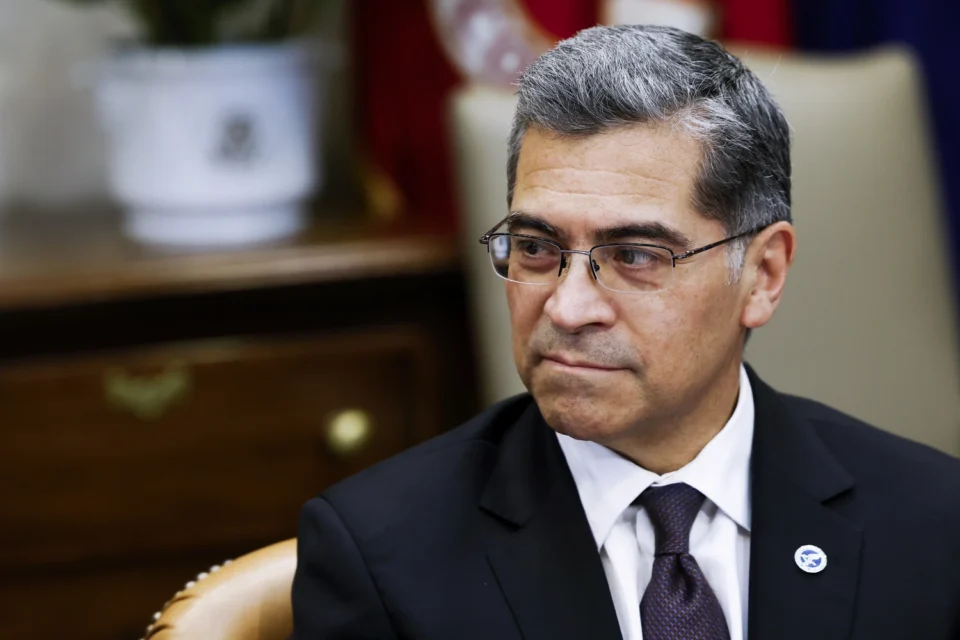
Former Health and Human Services Secretary Xavier Becerra is facing explosive allegations that his department rushed unaccompanied migrant children out of federal custody with inadequate safeguards, potentially placing vulnerable minors in the hands of traffickers, exploitative employers and poorly vetted sponsors.
The accusations strike directly at Becerra’s record as he campaigns to become California’s next governor, raising serious questions about whether his political ambitions can survive scrutiny of one of the most consequential failures under his leadership at HHS.
Chris Clem, a former senior adviser at HHS and retired chief patrol agent for the Border Patrol’s Yuma Sector, said the department operated an expedited release system that failed to properly scrutinize the adults taking custody of migrant children.
“There was very little vetting of sponsors,” Clem said. “That’s when they become missing.”
Clem said the scale of the crisis made it impossible for Becerra to credibly distance himself from the consequences.
“The single largest border crisis of our lifetime and the largest amount of kids — this does rise to the secretary’s level, and he should have had a finger on the pulse daily,” Clem said.
Becerra led HHS from March 2021 until early 2025, overseeing the agency during a historic surge of unaccompanied minors at the southern border. His department was responsible for sheltering those children, screening potential sponsors and helping ensure they were not released into dangerous situations.
The whistleblower accounts suggest that system broke down under Becerra’s watch.
Children Allegedly Released in the Middle of the Night
A former caseworker at the Pomona Fairplex, which the Biden administration converted into an emergency intake facility in 2021, alleged that children as young as six were released to adults who had not been adequately investigated.
According to the former employee, children were sometimes awakened at 2 or 3 a.m., handed their belongings and removed from the facility without staff knowing who would ultimately transport them.
“We have no idea who was going to be transporting the children,” the whistleblower said, suggesting the late-night departures were intended to ensure that “nobody would see the children leaving the facility.”
The former caseworker also alleged that siblings were separated and that some children were later subjected to sex trafficking or forced labor.
Those claims paint a devastating picture of a federal system more focused on moving children out of custody than ensuring they were actually safe after release.
The allegations were presented during a news conference organized by Republican gubernatorial candidate Steve Hilton, who has made Becerra’s record at HHS a central issue in the campaign.
Although the allegations have not been adjudicated in court, they are consistent with years of warnings that the federal government lost meaningful oversight of thousands of migrant children after placing them with sponsors.
Federal Government Could Not Reach More Than 85,000 Children
A 2023 investigation by The New York Times found that HHS was unable to reach more than 85,000 migrant children during follow-up calls over a two-year period.
The investigation uncovered cases of children working dangerous jobs in factories, slaughterhouses and other workplaces after being released from federal custody.
While an unanswered follow-up call does not prove that every child was missing or trafficked, the sheer number of unreachable children exposed a staggering failure of federal oversight.
Becerra’s department could not reliably say whether tens of thousands of minors remained with their sponsors, had been exploited for labor, had been trafficked or had simply disappeared from the system.
An HHS Office of Inspector General review also identified deficiencies in sponsor screening, documentation and post-release procedures within the Office of Refugee Resettlement.
A separate Department of Homeland Security inspector general report found that Immigration and Customs Enforcement could not consistently monitor the location or immigration proceedings of unaccompanied children after their release from HHS custody.
The DHS report found that more than 32,000 children failed to appear for scheduled immigration hearings between fiscal years 2019 and 2023. ICE had also failed to serve notices to appear in immigration court on more than 291,000 children as of May 2024.
The figures span multiple agencies and years, but they underscore the scale of the breakdown: the federal government processed hundreds of thousands of vulnerable children and then failed to maintain a reliable system for tracking what happened to them.
Becerra Reportedly Pushed an ‘Assembly Line’ Approach
As border facilities became overwhelmed in 2021, the Biden administration faced pressure to release children from government custody more quickly.
Becerra reportedly pushed officials to increase the pace of releases and compared the desired operation to an “assembly line.”
That comparison now appears especially damaging.
An assembly-line approach may have helped HHS reduce the number of children in federal shelters, but whistleblowers and watchdog reports suggest it came at the expense of careful sponsor vetting and meaningful post-release oversight.
Under federal law, unaccompanied children are transferred from the Department of Homeland Security to HHS, which is responsible for housing them and identifying parents, relatives or other approved sponsors.
Becerra has argued that HHS inherited an overwhelmed immigration system and that the department generally loses legal custody after a child is released to a sponsor. He has also rejected claims that his administration simply “lost” hundreds of thousands of children.
But those defenses do not answer the central questions.
Why did his department release children when sponsor screening was inadequate? Why were federal officials unable to reach more than 85,000 minors afterward? Why were children allegedly removed from facilities in the middle of the night without staff knowing who would transport them? And what did Becerra personally do when evidence emerged that children were ending up in dangerous workplaces or exploitative situations?
As HHS secretary, Becerra was not a bystander. He was the cabinet official in charge.
The whistleblower allegations now force him to defend a system that allegedly prioritized speed over safety and left federal authorities unable to account for the welfare of thousands of migrant children.
For a candidate asking Californians to entrust him with the nation’s largest state government, that record may be impossible to dismiss as someone else’s failure.
